3 ways to replace missing teeth
15th Sep 2026
Missing teeth are usually caused by tooth decay, gum disease, an injury, or a genetic condition. Whatever the cause, if you want to replace a lost tooth or cover the gap caused by missing teeth, there are several treatment options available.
Here are some of the available treatments, along with their pros and cons:
Dental implants are usually used when you need to replace one or more missing teeth. For this treatment, the dentist places a titanium implant post into the upper or lower jaw. A replacement tooth is then attached to the implant once it has healed.
Dental implants provide a permanent foundation for replacement teeth.
The main advantage of dental implants is that they closely resemble natural teeth and can last for many years with proper care.
Another benefit is that the treatment does not involve the neighbouring teeth, unlike traditional dental bridges.
Dental implant treatment involves surgery, so you need to be in good general health to support the healing process. It can also take several months for the implant to heal fully.
The replacement tooth is usually fitted after the implant has healed and integrated with the jawbone.
Dental implants are generally more expensive than other tooth replacement options.
Fixed dental bridges are often effective for people replacing one or more missing teeth in the same area.
This treatment uses an artificial tooth to bridge the gap left by a missing tooth. The replacement tooth is supported by the adjacent teeth and secured using dental cement.
Dental bridges can look similar to natural teeth and help restore the appearance and function of your smile. They are also generally less expensive than dental implants.
With fixed dental bridges, it can be more difficult to clean around and underneath the bridge. The treatment may also require the adjacent teeth to be altered, which can affect them over time.
If the area underneath the bridge is not cleaned properly, plaque and bacteria can build up and increase the risk of gum problems, infection or tooth decay.
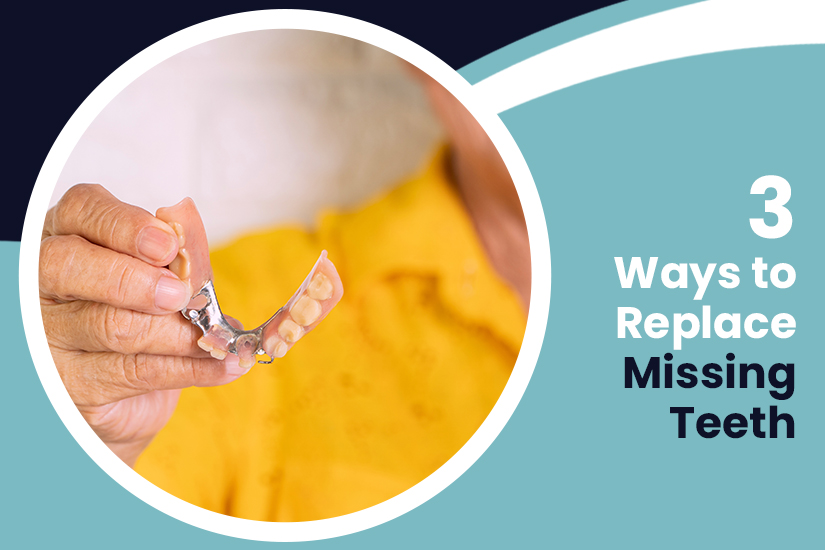
When replacing several missing teeth, your dentist may recommend removable partial dentures.
A partial denture consists of replacement teeth attached to a natural-looking pink base. The denture is held in place using the remaining natural teeth.
The base is usually designed to match your gum colour, while the replacement teeth are made to resemble your natural teeth.
Partial dentures can be used to replace more than one missing tooth in a particular area.
Removable partial dentures are generally a more affordable tooth replacement option and can provide a natural-looking appearance.
It can take some time to get used to wearing partial dentures. They need to be removed and cleaned daily and should generally be taken out before going to bed. As they are removable and handled regularly, they can also be more susceptible to damage.
If you have missing teeth, speak to your dentist about your options. They can assess your oral health and recommend the most suitable tooth replacement treatment for your needs.
Some health insurance plans may cover part of the cost of tooth replacement. If insurance does not cover your treatment, your dental practice may be able to offer suitable payment options.
Call Smile Clinic London on 0207 139 8611 to schedule an appointment today.

Request a Callback
Leave your details and one of the team will be in touch within 24 hours to help you